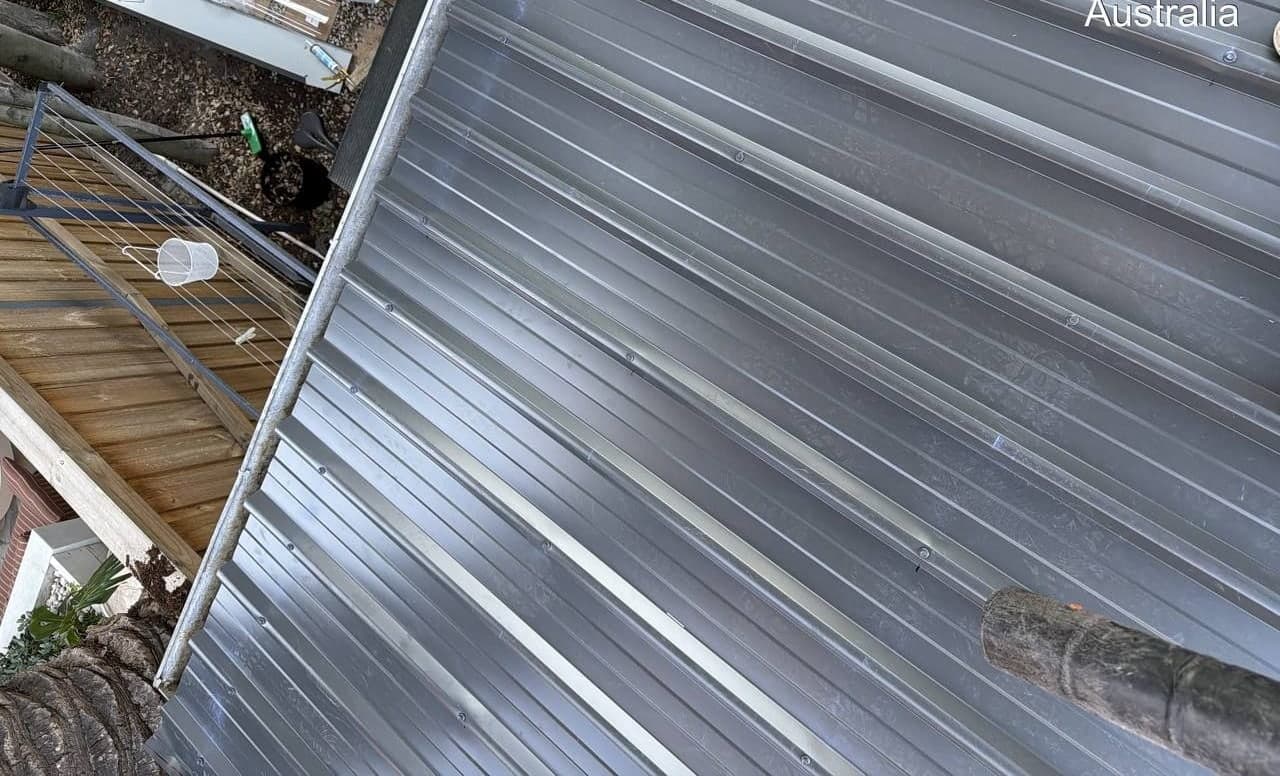
If you're considering a Colorbond roof for your Sydney home, you're probably wondering how long it will actually last. The short answer: a well-installed Colorbond roof typically lasts 50–70 years in Sydney's climate—significantly longer than concrete or terracotta tiles.
But lifespan depends on several factors: coastal vs inland location, maintenance habits, and whether you've chosen the right grade for your environment. Let's break down exactly what you can expect from a Colorbond roof in Greater Sydney, backed by real-world data and our 15+ years installing metal roofing across Bondi, Mosman, Castle Hill, and Wollongong.
What Is Colorbond and Why Does It Last So Long?
Colorbond is a pre-painted steel roofing material manufactured by BlueScope Steel in Australia. It's engineered specifically for our harsh UV, salt, and storm conditions.
The secret to its longevity is the five-layer coating system: a metallic-coated steel base (either Zincalume or Activate), corrosion-resistant pre-treatment layers, primer, and a baked-on topcoat. This isn't paint you can scratch off—it's thermally bonded at the factory.
In Sydney, where temperatures swing from 5°C winter mornings to 40°C summer days, Colorbond expands and contracts without cracking. Unlike tiles that can break or concrete that absorbs moisture, steel sheds water instantly and resists mould, lichen, and rot.
Expected Lifespan: Coastal vs Inland Sydney
Inland suburbs (Parramatta, Castle Hill, Penrith): 60–70 years with minimal maintenance. You're protected from salt spray, so the standard Colorbond range performs beautifully.
Coastal zones (Bondi, Coogee, Cronulla, northern beaches): 50–60 years if you use Colorbond Ultra or stainless steel Colorbond. Standard Colorbond in marine environments (within 1 km of the coast) can show edge corrosion after 20–30 years, which is why we always recommend the marine-grade upgrade. Expect to pay $140–$185/m² installed for Ultra vs $120–$160/m² for standard.
Wollongong and south coast: treat as coastal—salt mist travels inland here. We've seen 25-year-old standard Colorbond roofs in Port Kembla with rust blooms, while Ultra roofs installed the same year still look factory-fresh.
What the Warranty Actually Covers
BlueScope offers a material warranty on Colorbond:
- Perforation warranty: 20 years for standard Colorbond in non-marine areas; 15 years in severe marine zones (within 200m of breaking surf). For Colorbond Ultra, this extends to 20 years even in marine zones.
- Paint film warranty: 15 years against peeling, flaking, or chipping under normal conditions.
Critical point: the warranty covers manufacturing defects, not installation errors, storm damage, or lack of maintenance. If gutters overflow and water sits on the roof for weeks, that's not a warranty claim.
At Crown Roofers (NSW Lic. 471250C), we provide a separate 10-year workmanship guarantee covering flashing, fastener placement, and all penetrations. Combined with BlueScope's material warranty, you're protected for two decades at minimum.
Factors That Shorten (or Extend) Lifespan
What shortens it:
- Walking on the roof incorrectly: Colorbond dents if you step in the pans (valleys between ribs). Dents collect water, which accelerates corrosion. Always walk on the ribs or use a ladder standoff.
- Debris buildup: Leaves and dirt trap moisture. If you have overhanging gums or Moreton Bay figs, clean valleys and gutters twice a year.
- Cutting or drilling: Any cut edge (skylight, whirlybird, solar panel mount) exposes raw steel. We always seal these with marine-grade silicone and touch-up paint, but DIY solar installers often don't.
- Dissimilar metals: If copper or lead flashing touches Colorbond without a barrier, galvanic corrosion starts within months. We see this most often around chimneys.
What extends it:
- Annual hose-down: Once a year (usually October before storm season), hose the roof with fresh water to remove salt and pollutants. This single habit can add 10 years to coastal roofs.
- Gutter maintenance: Blocked gutters cause water to back up under the roof edge. Clean gutters mean dry fascia and eaves—no rot, no rust.
- Proper ventilation: Heat buildup in the roof space can degrade insulation and stress the steel. We install Whirlybirds or ridge vents on most jobs to keep airflow moving.
- Prompt repairs: If a branch punctures the roof or a fastener backs out, call a licensed roofer immediately. A $280 repair today prevents a $1,200 rust patch in five years.
How Does Colorbond Compare to Tiles?
Concrete tiles: 30–50 years. They become porous after 25 years, requiring rebedding and repointing ($65–$95/m²).
Terracotta tiles: 50–100 years for the clay itself, but mortar and sarking degrade. You'll rebed at least once, often twice.
Colorbond: 50–70 years with no rebedding, no painting, no broken tile replacement. Maintenance cost over 50 years is roughly 60% lower than tile.
For a typical 150m² Sydney home, that's $8,000–$12,000 saved in maintenance alone—enough to offset the higher upfront cost of Colorbond (around $18,000–$24,000 installed vs $15,000–$21,000 for concrete tile in 2025).
When to Replace vs Repair
Call us at 0480 086 787 if you notice:
- Rust spots larger than a 50-cent coin, especially near ridges or valleys
- Multiple fastener failures (screws backing out, washers cracked)
- Daylight visible through pinholes in the roof space
- Sagging or oil-canning (waves in the sheets between ribs)
Small repairs—replacing a single sheet, re-sealing a penetration—cost $450–$850. If more than 30% of the roof shows corrosion or the sarking has failed, replacement is more cost-effective.
The Bottom Line for Sydney Homeowners
A Colorbond roof is a 50–70 year investment in Sydney, provided you:
- Choose the right grade for your location (Ultra within 5 km of the coast)
- Hire a licensed contractor (NSW Lic. 471250C) who follows BlueScope installation standards
- Maintain gutters and hose the roof annually
- Address small issues before they become big problems
We’ve installed Colorbond roofs right across Greater Sydney and Wollongong, and the oldest ones we still check on look near-new. The key is starting right: proper sarking, correct fastener spacing, and marine-grade materials in coastal zones.
If you're weighing Colorbond vs tile or wondering whether your existing metal roof has another decade left, book a free roof inspection. We'll give you an honest assessment—no upselling, just straight answers from a family-owned business that's been roofing Sydney homes.
Tags
Frequently Asked Questions
How long does Colorbond last in coastal Sydney areas?
What voids the Colorbond warranty?
Is Colorbond worth the extra cost over tiles?
How often should I maintain a Colorbond roof in Sydney?
Can I install solar panels on a Colorbond roof?
When should I replace vs repair a Colorbond roof?
Practical next steps
Find the right roofing help
Explore services related to this guide, or check whether Crown Roofers works in your area.
Crown Roofers Team
Crown Roofers is a NSW-licensed Sydney roofing contractor with $20M public liability and a written 10-year workmanship guarantee.